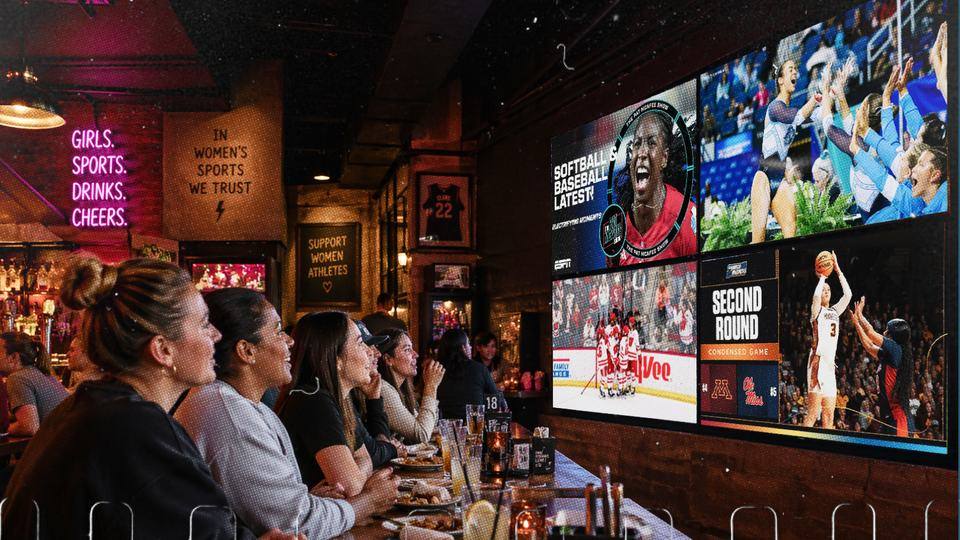

We’ll close this stretch with a small, stubborn truth: you can tell a lot about a sport’s place in the culture by whether you can watch it in a bar. It sounds trivial. It isn’t. The sports bar is a public living room, and who gets the remote there says something about who the game is for.
For years, those of us who wanted to watch women’s games out in the world had to ask. We asked bartenders to change the channel, we explained which game we meant, and we occasionally got a shrug. The asking itself was a kind of tax, a reminder that our fandom was an exception to the room’s defaults.
That has started to shift, and the shift is worth celebrating. Venues dedicated to women’s sports have appeared, and mainstream spots increasingly keep a screen reserved for the game. Each one is a small piece of infrastructure for a community that used to improvise. A shared table and a good sightline can do more for fandom than a billboard.
There’s a business story here too, and we’d be doing our jobs poorly if we skipped it. Bars are looking for reasons to fill seats on nights that would otherwise be slow, and women’s sports fans show up with energy and loyalty. When owners notice that overlap, the decision to carry the games becomes easy rather than charitable.
But the deeper value is social. A bar full of strangers cheering for the same team is how casual interest turns into belonging. People learn the rules from the person next to them. They pick a favorite player because someone’s friend made a case for her. Community is built one round at a time.
So our note on the way out is an invitation. Go find the room that shows the game, and if there isn’t one, ask for it politely and bring friends. Tip well. Stay for the postgame conversation. Places respond to the people who show up, and every full table is an argument that the screen was worth turning on.
Thanks for reading along with us. We’ll see you at the bar, probably arguing about a call, and happy to be doing it somewhere that finally has the game on.