
Naming is the hardest thing in branding. I’ve been doing this for more than 30 years, and I can tell you: there is no perfect name. Every word comes with history, associations, unintended meanings, and someone who absolutely hates it. Which brings me to Sirens.
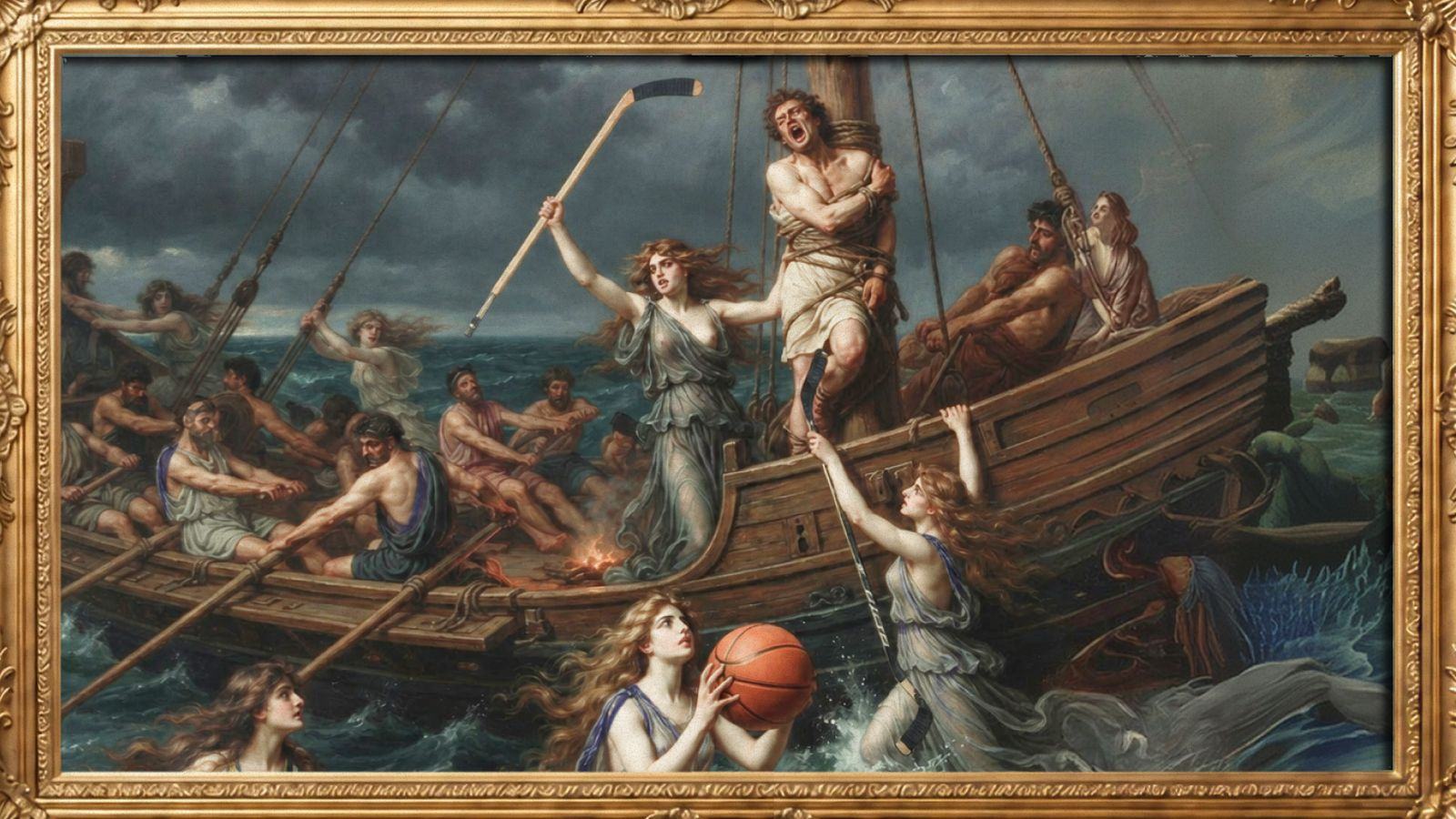
The New York Sirens of the PWHL and the newly announced Cleveland Sirens of the WNBA have landed on exactly the same name—and yet they mean very different things by it. For New York, the siren is the sound of the city: urgent, impossible to ignore, part of its relentless rhythm. For Cleveland, the Siren comes from mythology: the legendary creatures whose voices were so powerful they could call sailors toward them, tied here to the waters of Lake Erie. Two interpretations. One word.
And personally? I hate the name. As a woman, I don’t particularly want to be called a Siren. Because underneath both interpretations is cultural baggage that’s hard for me to ignore.
The mythological Siren belongs to a long tradition of stories in which female power—particularly a woman’s voice, sexuality, or ability to command attention—is portrayed as dangerous. The woman is temptation. She distracts the man from his path. She leads him toward destruction. It’s a story we’ve heard in one form or another for thousands of years: beware the powerful woman.
Then there is the modern siren. Loud. Alarming. Disruptive. Something demanding your attention whether you want to give it or not. Those associations aren’t exactly where I would have started in naming a women’s team.
But here’s the thing: A name isn’t a brand.
A name is a flag you put in the ground. What happens next determines what that flag eventually represents. I’ve watched this happen throughout my career. We can spend months searching for the perfect combination of letters and sounds, testing meanings, trademark availability, cultural associations, and every possible interpretation. Eventually, though, you have to choose. And once you choose, the work changes. You stop asking what the name means and start deciding what it will mean.
That is what makes these two Sirens particularly interesting to me, because women have been doing exactly that for generations. We have taken words, roles, and assumptions that culture assigned to us and changed their meaning. Too loud. Too ambitious. Too emotional. Too aggressive. Too opinionated. Too much. Women have heard all of it. And slowly, persistently, we have changed what power looks like, what leadership sounds like, and whose voices deserve to be heard.
So maybe the most interesting thing about the word Siren isn’t what it has meant. It’s what these women can make it mean.
For the New York Sirens, that meaning is already being shaped on the ice. Every game, every player, every fan, every win and loss adds something to the word. For Cleveland, the meaning hasn’t even been written yet. The team doesn’t begin WNBA play until 2028, and the players—the women who will ultimately give the name its substance—haven’t all arrived. That’s the opportunity!
But Cleveland has already started. Its launch film, Hear the Call, may be the most convincing argument for the name. It takes the Siren away from temptation and danger and begins to reframe her around voice, power, presence, and being heard. “This is her story. This is her voice. And the world is listening.” It’s a great example of branding doing exactly what it should do: not explaining away the baggage of a name, but beginning to give it new meaning.
Brands aren’t built at launch, they’re built in thousands of moments afterward: how you perform, how you behave, how you show up for your community, how you treat your fans, what you stand for, and whether you do those things consistently enough that people begin to believe you. Eventually, the organization doesn’t define the name anymore.
Fans do.
So today, Siren may still carry ideas of temptation, danger, alarm, and disruption. But perhaps that’s not where the story ends. Perhaps these women can do what women have always done: Take something culture has defined for them and redefine it for themselves.
A Siren doesn’t have to be a warning. She can be the reason people listen.
And if New York and Cleveland get it right, someday we may hear the word Siren and think of something entirely different: power, presence, excellence, and a voice impossible to ignore.
That’s the true work of branding.
Right now, I'm helping build a platform that creates opportunity for the women who built the game - the ones who rarely got credit, compensation, or equity. A place where athletes don't just inspire the next generation... they own part of what they helped create.